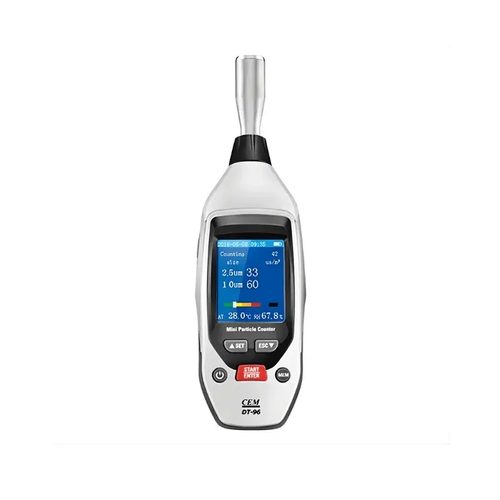
Particle counters measure the concentration of microscopic particles suspended in the air. PM2.5 (2.5 micrometres and smaller) and PM10 (10 micrometres and smaller) particles are invisible to the eye but can enter the body through the airways and cause serious health problems.
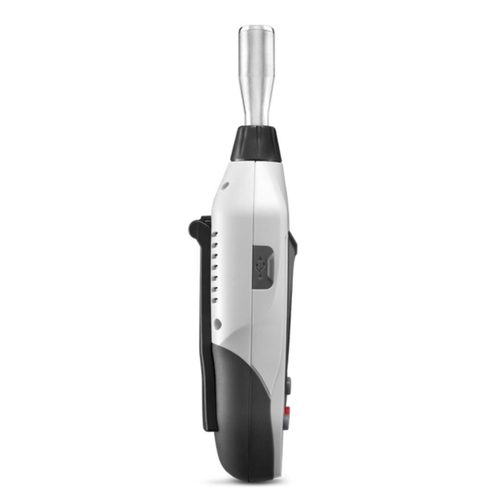
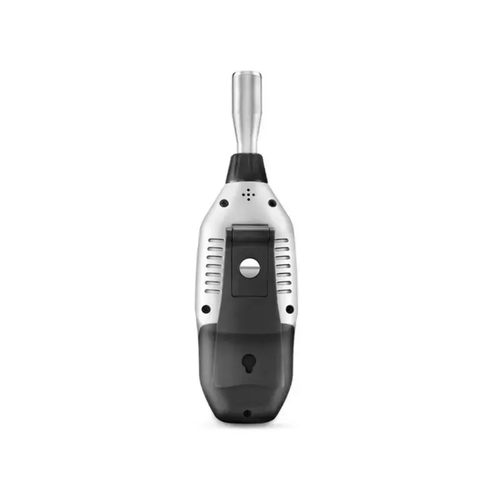
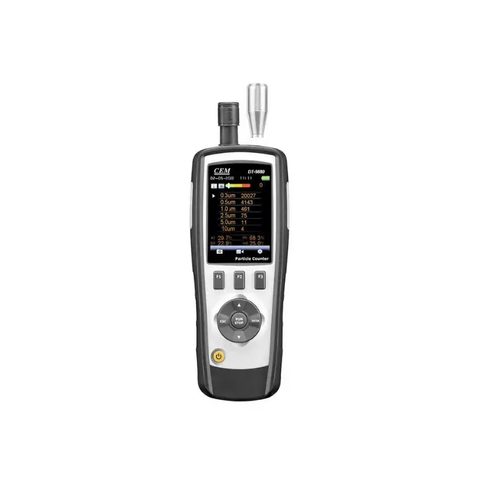
According to World Health Organization data, particulate pollution causes millions of deaths every year, raising the risk of asthma, bronchitis, heart disease and lung cancer. The CEM DT-96 detects this invisible hazard so that appropriate measures can be taken.
PM2.5 and PM10 measurement: measures precisely across 0–500 µg/m³ with 1 µg/m³ resolution. Two particle size channels track fine and coarse particles at the same time.
Humidity measurement: measures relative humidity across 0–100% RH (±3.5% RH between 20–80% RH, ±5% RH elsewhere).
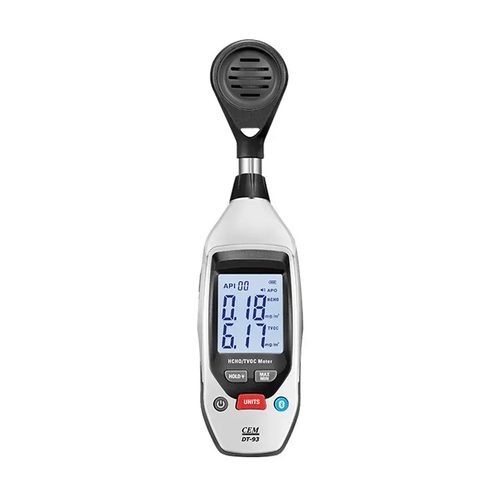
2.0-inch TFT colour LCD: displays all measurement data clearly at 220x176 pixels.
Analogue bar indicator: follow changes in particle concentration visually.
Real-time clock: records the time of each measurement for time-based analysis.
Bluetooth interface: transfer measurement data wirelessly to a smartphone or tablet, build long-term records and carry out detailed analysis.
Particles 2.5 micrometres and smaller can reach the deepest parts of the lungs and enter the bloodstream. The main sources are vehicle exhaust, industrial emissions, fuel burnt for heating, and tobacco smoke.
Particles 10 micrometres and smaller accumulate in the upper airways. The main sources are construction work, road dust, agricultural activity and wind-blown soil.
Short-term effects: irritation of the eyes, nose and throat, coughing, shortness of breath, and triggering of asthma attacks.
Long-term effects: chronic lung disease, lung cancer, cardiovascular disease and reduced life expectancy.
Measures particles across 0–500 µg/m³ at 1 µg/m³ resolution, with ±1°C accuracy on temperature and ±3.5–5% RH on humidity.
Enable Bluetooth to pair with your mobile devices and transfer data wirelessly.
Supplied factory calibrated. Professional calibration once a year is recommended for the most accurate measurement.
Note: the World Health Organization recommends limit values for PM2.5 of 5 µg/m³ as an annual mean and 15 µg/m³ as a daily mean. The CEM DT-96 allows these to be monitored regularly.